


At a glance
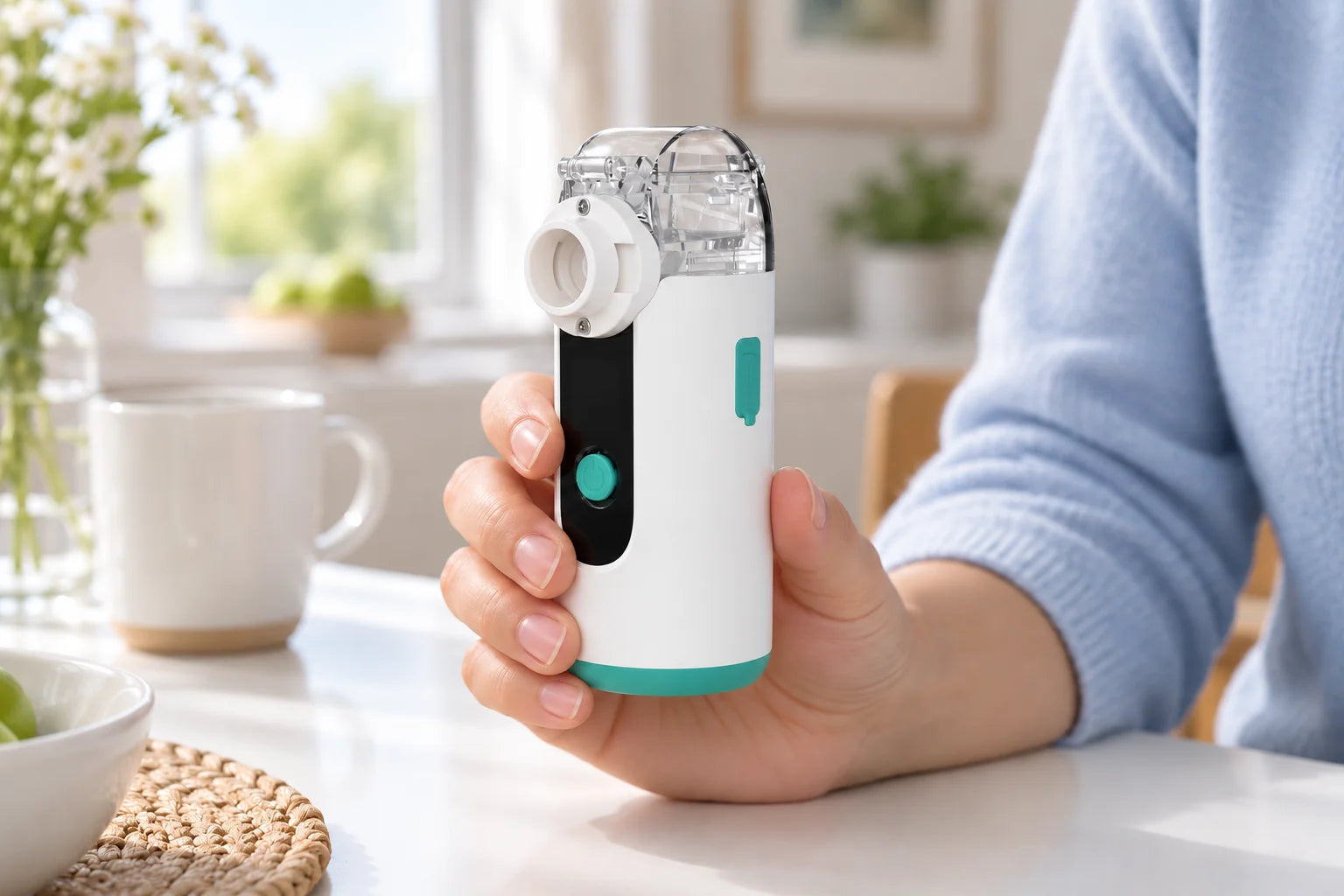
- MY139 combines a rechargeable handheld body, display and detachable cup.
- CN69 uses a wall-powered compressor, separate cup and air tubing.
- Confirm the sales version and package contents for either device.
This guide links to Kinmilu's own catalog. The comparison uses source-listed information; we have not independently tested the devices described.
Format describes a setup, not a result.
“Handheld” and “tabletop” describe the physical arrangement. To make those terms useful, this guide compares two named examples from the collection: the MY139 mesh device and the CN69 compressor device.
The MY139 brings its controls and cup into one handheld assembly. The CN69 uses a main compressor unit, a separate medicine cup and air tubing. These differences help you picture the setup; they do not establish which device is appropriate for a particular treatment.
The details below come from the source-listed information recorded on each model page. They are not measurements from independent testing. Confirm the exact sales version and supplied components before purchase.
Two named devices, side by side.
On a small screen, swipe the table to read both models.
| What to compare | MY139Handheld mesh | CN69Tabletop compressor |
|---|---|---|
| Power arrangement | Built-in rechargeable battery; Type-C cable listed. | Wall-powered. Exact voltage needs confirming for the regional version. |
| Controls | Digital display, two mist settings and a 10/20-minute timer listed. | I/O rocker switch listed. |
| Medicine cup | Detachable cup with a hinged lid, attached to the handheld body. | Separate medicine cup connected to the main unit by air tubing. |
| Setup to account for | Handheld body, cup and the power items supplied with the package. | Main unit, cup, air tubing and the regional power connection. |
| Before you buy | Confirm the charging requirements and exact included accessories. | Confirm the electrical rating and exact cup, tubing and accessories. |
Model records: MY139 information and CN69 information. A listed setting or timer is a hardware feature, not an operating recommendation.
Do not compare unlike numbers.
Some comparison questions remain open. Do not fill these gaps with a conclusion based on size or appearance:
- Noise
- A useful comparison needs measurements made with a stated method and comparable conditions.
- Weight and portability
- Compare the complete equipment you would carry, including power items and required components.
- Battery runtime
- A built-in battery does not establish a runtime or confirm operation while charging.
- Performance and suitability
- Hardware layout alone cannot establish output, treatment suitability or clinical results.
If a specification is important to your decision, request the matching document and keep the source with your notes.
Take the next step with a specific question.
Use the device format to narrow your questions, then check the exact model and sales package.
- Looking at a handheld setup? Check the MY139 product record, charging arrangement and cup details.
- Looking at a tabletop setup? Check the CN69 product record, power requirements and separate components.
- Comparing a different device? Use the same fields in our buying checklist.
For an unanswered detail, send a product question with the model code. Owners should use the model directory for the instructions and help routes attached to their device.
Include the page address, the statement and the source we should review.